

They say ambition is beautiful, until it is worn by an African woman. Suddenly, it is not so great. It becomes too much, masculine and threatening. So, we are left wondering: is ambition truly unattractive for African girls?
This question is not just a philosophical one; it is personal. It is embedded in our upbringing, our culture, our relationships, and our self-worth. For generations, ambitious African women have been misunderstood, misjudged, and often punished for their drive. In this blog, we unravel where the belief comes from, how it continues to affect African women today, and why it’s time to redefine what it means to be a woman with drive.
Where It All Began?
“Nyambura, ulimaliza degree?” I nodded in agreement.
“Unasoma sana.” My uncle blurted out while staring me down.
I tried to hold the gaze, but I didn’t know how to respond to that.
It was after completing my university coursework and awaiting graduation. A sister of my mother was being indoctrinated into the church by becoming a member of the Union of Catholic Mothers (UCM). She had thrown a party with friends and family. So, my mother and I attended; it was a good opportunity to meet everyone and catch up.
While having a small talk with my auntie’s husband, he said that to me.
“What does it even mean that I am reading too much? This was just a degree; what if I had just completed a master’s or a PHD? What would he say then?” I thought to myself. So, I just smiled, made myself busy, and walked away.
Many African girls can relate to this. From an early age, we are conditioned to lower ourselves. Please note, nobody sits us down and outright says, “don’t be ambitious,” but the message is there. It is in the silences; in the stories we are told and in the expectations. You’ll hear:
‘Don’t be too loud.’
‘Don’t study so hard; you will eventually get married.’
‘Get married first,
Have children first; a career can wait.’
‘Who will marry you when you are too educated?’
‘Men don’t like headstrong women.’
This teaches us something: a sack of underlying beliefs. That your value is in your timidity, your quietness, your obedience, and your ability to put others before yourself. And for most of us, we conform. We tame our ambitions because they don’t fit the mold.
The Stories We Are Told.
When I was a young girl, there were women I strongly admired. I still do. Wangari Maathai, Martha Karua, and Njoki Ndung’u.
Wangari Maathai.
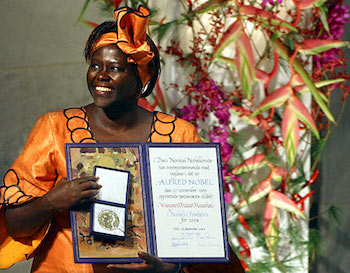
Wangari Maathai was an environmental activist; we learnt about her in social studies classes. She fought corruption, land grabbing, and political oppression in Kenya.
She had numerous merits, including winning the Nobel Peace Prize in 2004, being the first woman in East and Central Africa to earn a PHD from the University of Nairobi in 1971, and founding the Green Belt Movement that championed environmental rights.
Despite her achievements, back home, what the folks would say was that she was a radical woman who had been divorced by her husband. She had been reduced to a woman who couldn’t keep her man because of her ambition. Likewise, after winning a Nobel Prize, the then president made her an assistant minister for the Ministry of Environment. Such a move felt like intimidation instead of appreciation; it felt like he was crippling her wings.
She had achieved so much, fame and international recognition, but back at home, she still had to serve under a man when she truly deserved the top seat. For me, as a young girl, that screamed punishment.
Martha Karua.

Martha Karua is a formidable woman. The Iron-lady. She stands for justice, integrity, and a country free of corruption. In her fight against political oppression, what stood out for me was that she walked out on a serving president when the opposition team was denied a chance to make their remarks at a rally.
As she walked out, she made a fist bump, a sign of rebellion and defiance. That still impresses me even today because not many people can do that; most of us cower in the presence of power.
In the face of injustice, she fights, speaks up, and holds her head high. In 2009, she resigned as Kenya’s Minister of Justice, National Cohesion and Constitution Affairs because her efforts to reform the docket were being undermined.
In 2022, she supported the Late former Prime Minister, Raila Odinga, in his presidential race as his running mate; had they won, she would have been the country’s first female vice president. Her ambition continues to grow; she has also run for the presidential seat a few times, and her fight against injustices is still strong.
Despite her accomplishments, the narrative with the common folks is that she is an untamed, single mother. A radical, bitter woman who is divorced and dejected. It is ridiculous.
Njoki Ndung’u.
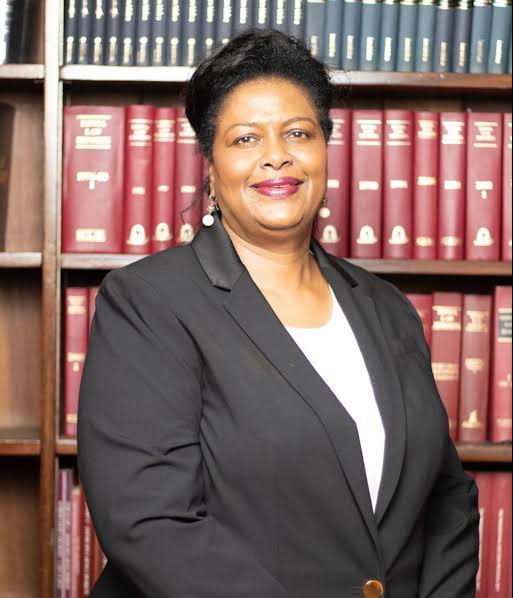
I first heard of Njoki Ndung’u on the news during her fight to reform the sex act in 2006. She was pushing to have sex offenders castrated. At a time when patriarchs really had a hold on society, she dared to speak up.
Njoki Ndungu had worked at the Office of the Attorney General; she was also a nominated Member of Parliament and moved several bills, including: a motion on maternity benefits, the Sex Offence Bill, a human rights amendment to the Refugee Bill, and amendments on Maternity and Paternity rights in the Employment Act 2007.
She is now a judge of the Supreme Court of Kenya. A formidable woman, yet her marital status comes into play. She has never been married and is a single mother of one child.
These stories were weaponized as cautionary tales that strong, ambitious, smart, highly educated women of integrity and substance don’t get the happily ever after. And as a young African girl, you learn to toe the line.
Culture Is Not the Enemy, But It Needs To Evolve.
In many African societies, tradition is sacred. Women are raised to be good wives, to be married, to be seen and not heard. While there is nothing wrong with women knowing how to nurture, they shouldn’t be limited to only this.
Our foremothers were ambitious. They fought colonialism, built farms, raised entire communities, and led revolutions. We read all about it in school; therefore, we can’t pretend that that spirit is not in us.
African cultures and societies need to expand more to accommodate women’s dreams and desires. Women have every right to be as ambitious as men, and the cost need not be so harsh.
The Cost of Being Ambitious.
For many African women, ambition is not a smooth road. It has twice, if not thrice, the hurdles, shame, and serious emotional tolls.
For women in love, ambition becomes you are too much. Too loud, too career-driven, too independent, or too unavailable.
For women with families, ambition becomes selfish. Selfish for not playing their part in furthering generations. Selfish for not marrying early or putting their career before children, and are accused of abandoning their families.
In your workplace, ambition is punished. You are labeled as ‘difficult’ for standing your ground; you are overlooked and underpaid.
Therefore, we start to internalize it. You question your dream. Is it worth it? You learn to shrink, hide yourself so you can be safe. Safe from the shame that ambitious women face. You lower yourself to accommodate others and shy away from your dreams. It is too costly.
The Revolution.
In this digital and information age, more and more women are rising across Africa. I mean, we have two serving female presidents already. From Nairobi to Lagos, to Johannesburg to Cairo, we are seeing women choosing to write their own rules.
Whether they are lawyers, content creators, farmers, pilots, or presidents, they are building lives that reflect both heritage and hunger. We no longer have two path options. We don’t have to choose between ambition and womanhood. We can have it all.
The Way Forward.
If you are an ambitious African woman reading this, here’s something you may need to hear:
Wanting more doesn’t make you less of a woman. Chasing your goal doesn’t mean abandoning your culture. You are not too much; you are the product of generations of women who were told to be quiet but still spoke anyway. They were told to shrink, but they dreamed anyway.
So is ambition unattractive for African Women?
I feel ambition is necessary. If people were not ambitious, we would still be living under colonial rule. I wouldn’t have gone to school. We wouldn’t have jobs, careers, maternity leave. Women wouldn’t vote, drive, own property, and have bank accounts.
It is thanks to the ambitious women before us that we get to enjoy these benefits. It is the reason communities continue to rise. So let your ambition be wrapped in grace, not guilt. It is the torch you carry when everyone else is trying to put out the fire in you.
If this spoke to you, share it with another African daughter; let her know she is not alone. ♥
Images credits from Pexel and Instagram Accounts.

Mourine Warui is a media and communication expert and seasoned writer. Her goal is to empower and offer solutions to everyday girl’s problems while provoking candid and authentic conversations. Other goals are to provide inspiration and entertainment to readers through creative, thought-provoking and edgy stories.