

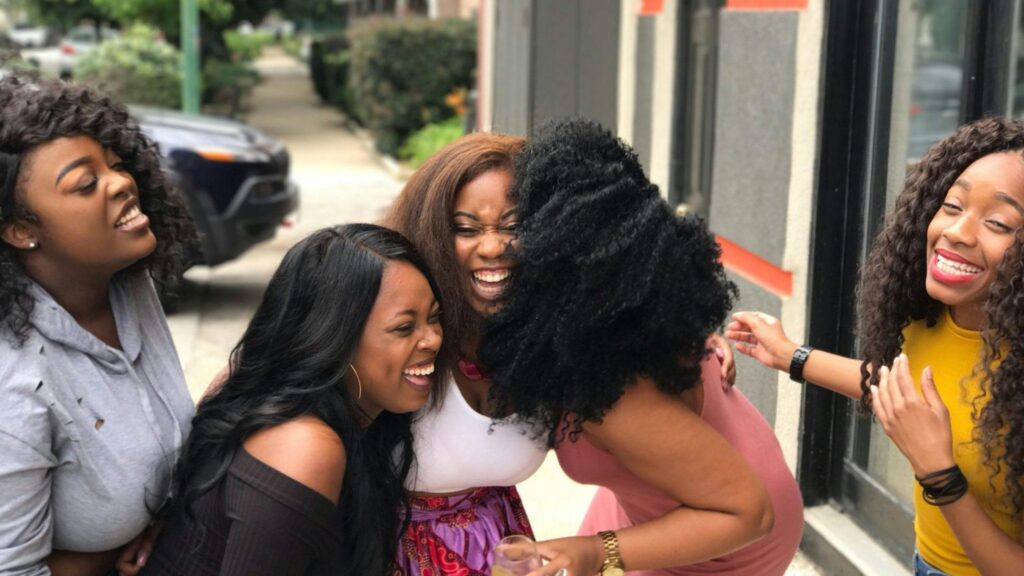
Photo by Vitaly Gariev on Unsplash.
If you are a TikTok fan, you have probably come across this word. “Pick-Me” or “Pick-Me-Sha”. It is a term often used by relationship experts and content creators to refer to a woman who goes out of her way to seek male validation and often puts other women down.
Research shows that 98% of women in the world have been “Pick-Me” girls at some point in their lives. This is because the ‘Pick-Me’ phenomenon is a societal conditioning that equates a woman’s worth to her desirability.
No wonder you hear so many cases of women fighting for a man. Everyone is claiming that the ‘boy is mine’. Or more absurd scenarios of mothers hating on their daughters because they have a close relationship with their fathers.
To understand the ‘Pick-Me’ culture, we must look beyond individual behavior and onto the social conditioning that fuels it.
The Conditioning.
Sixty to fifty years ago, being chosen by a man was actually important. It meant financial security, social status, respectability and advancement of life. It was a time when women were not allowed to work, vote, drive or be anything other than a tool for men to use. Therefore, it was more important to get married than to be single. It was for survival.
However, times have changed. We live in an era of female presidents, women CEOs, and female empowerment. Women have the freedom to be whoever and whatever they choose to be. We have a voice and a pretty powerful one, for that matter. Therefore, there is no need to be a ‘Pick-Me’ girl anymore.
However, that’s not the case. Women have been and are still being taught to tie their value to male approval.
In weddings, you will hear the phrases:
“Picked a flower.”
“Choose her among many.”
“She will cook and cater to her husband”
These phrases have an underlying message that registers in our minds. To have a wedding and a marriage, you have to be like a flower: beautiful and outstanding, ready to be picked. Also, you have to know how to cater to the needs of men. Therefore, you can cook, clean and be ready to submit to your husband. In some wedding ceremonies and cultures, they will have the bride cook ugali as guests watch, to prove the bride’s capability to cater to her husband.
Also, the media and pop culture have played a significant role in enforcing those messages. Like a song that romanticizes being ‘the other woman’ or one encouraging competition for male validation.
As well as movies, TV shows and discussions that reinforce the idea that ‘good women’ are those who tolerate, understand men’s flaws, are forgiving and selfless, while ‘bad women’ are those who demand respect or walk away from toxic behavior. Often termed and seen as problematic. Such messaging conditions women to compete with each other.
With this in mind, ‘Pick-Me’ behavior is not always conscious.
Is Being a Pick Me A Bad Thing?
This is where the controversy starts. Some people argue that ‘Pick-Me’ behavior harms all women by perpetuating sexist norms and reinforcing male dominance. When a woman publicly mocks or dismisses other women to earn approval, she inadvertently validates the very system that limits her.
Others argue that labelling women as ‘Pick-Me’ is in itself a ‘Pick-Me’ behavior. The alienating of oneself from a group of women and putting them down is the definition of a ‘Pick-Me’. It is an unfair dismissal of a personal choice. Not every woman who enjoys traditional gender roles or seeks to please her partner is doing so from a place of internalized misogyny or insecurity. Some women genuinely prefer those roles, and that’s equally valid.
Everybody wants to be loved. To be chosen and deemed special. However, it only becomes problematic if you put other women down to achieve it. The real issue arises when validation from men becomes the main source of self-worth. Then, it is a bad thing!
It is bad when a woman seems to excuse male irresponsibility or blame women for their struggles in relationships. When a woman says, “Men cheat because women nag too much,” people might reply, “Okay, Pick-Me-Sha!”
If she claims, “Real women don’t ask men for money,” it’s often seen as echoing patriarchal narratives of the ‘Strong, independent woman’ who expects nothing even when men are failing to meet basic responsibilities. Then she becomes a Pick-Me and Bob-the- builder.
The Take Away.
The antidote to Pick-Me culture is not shaming women. It is in fostering awareness and self-worth. Recognizing that your value is not dependent on being chosen or being ‘different’ from other women is the first step.♥

Mourine Warui is a media and communication expert and seasoned writer. Her goal is to empower and offer solutions to everyday girl’s problems while provoking candid and authentic conversations. Other goals are to provide inspiration and entertainment to readers through creative, thought-provoking and edgy stories.

This a very thought provoking topic. Nicely done.
Thank you for reading, we appreciate you